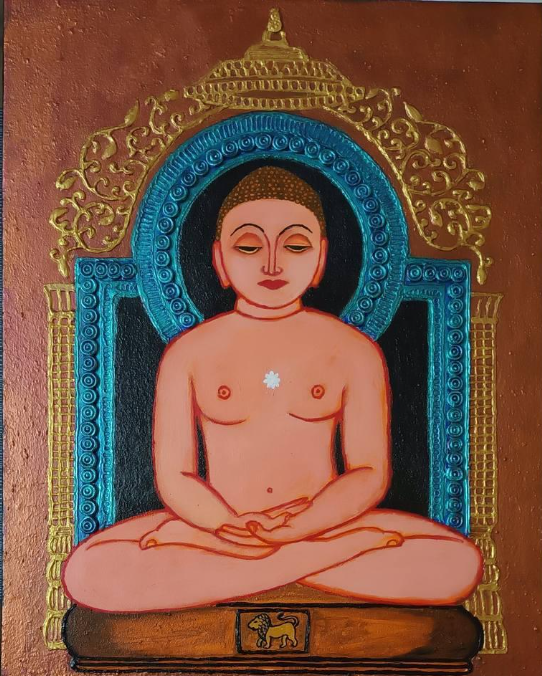
Vardhamana, popularly known as Mahavira, occupies a central position in Jain tradition as the 24th Tirthankara. Historical dating of his life is debated; Jain tradition generally places his life around 599–527 BCE, while some modern scholarly chronologies differ. Therefore, a website should preferably label these dates as traditional rather than absolute.
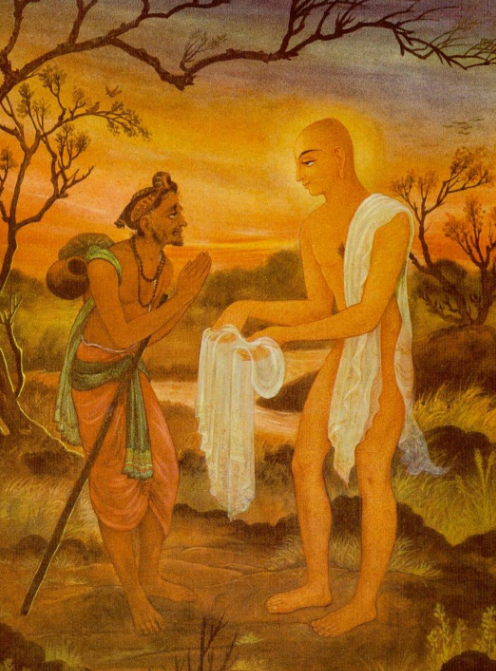
According to Jain tradition, Vardhamana was born into a prosperous Kshatriya family. He experienced a privileged early life but gradually became increasingly concerned with questions of existence, attachment and liberation. At around the age of 30, he renounced worldly life.
This was not an easy decision. He adopted an extremely disciplined ascetic life and spent approximately twelve years pursuing spiritual realization through meditation, restraint, fasting and endurance. After this prolonged period of discipline, he attained Kevala Jnana, or perfect knowledge.
His transformation from Vardhamana to Mahavira represents an important lesson: great achievement often involves a long period during which progress is invisible to others.
Following his spiritual awakening, Mahavira travelled widely and taught his understanding of the path toward liberation. Jain tradition places enormous emphasis on Ahimsa, or non-violence, together with truth, non-stealing, celibacy and non-possessiveness.
The principle of non-possessiveness is particularly relevant to modern aspirants. Competitive examinations can easily produce comparison, anxiety and obsession with outcomes. Mahavira's life suggests a different approach:
control what you can control—your effort, conduct, discipline and response to circumstances.
Mahavira's teachings continued to influence Indian philosophical and ethical traditions long after his lifetime. Jainism recognizes him not as the founder of Jainism in the absolute sense, but as the 24th Tirthankara who revived and propagated its teachings in his era.